Τετάρτη 27 Απριλίου 2022

Research Review: Do antibullying interventions reduce internalizing symptoms? A systematic review, meta‐analysis, and meta‐regression exploring intervention components, moderators, and mechanisms

alexandrossfakianakis shared this article with you from Inoreader

Background

Effective antibullying interventions may reduce the impact of bullying on young people's mental health. Nevertheless, little is known about their effectiveness in reducing internalizing symptoms such as anxiety or depression, and what factors may influence intervention effects. The aim of this systematic review, meta-analysis, and metaregression is to assess the effects of school-based antibullying interventions on children's and adolescent's internalizing symptoms. The secondary aims are to explore potential moderators, intervention components, and reductions in bullying as mediators of intervention effects on internalizing symptoms.

Methods

We searched nine databases: PsycINFO, Web of Science, ERIC, SCOPUS, CINAHL, Medline, Embase, ProQuest, and Cochrane Library, and performed an author search of included studies in English from January 1983 to April 2021. We included studies that evaluated school-based antibullying interventions using controlled designs and reporting on both bullying and internalizing outcomes. Random-effects and metaregression models were used to derive Hedges g values with pooled 95% CIs as estimates of effect size and to test associations between moderator variables and effect size estimates. Path analysis was used to test potential mediation using effect size measures of victimization, perpetration, and internalizing outcomes. Quality and risk of bias were assessed using Cochrane collaboration tools.

Results

This review included 22 studies with 58,091 participants in the meta-analysis. Antibullying interventions had a very small effect in reducing overall internalizing symptoms (ES, 0.06; 95% CI, 0.0284 to 0.1005), anxiety (ES, 0.08; 95% CI, 0.011 to 0.158), and depression (ES, 0.06; 95% CI, 0.014 to 0.107) at postintervention. The reduction in internalizing symptoms did not vary significantly across geographic location, grade level, program duration, and intensity. The intervention component 'working with peers' was associated with a significant reduction, and 'using CBT techniques' was associated with a significant increase in internalizing outcomes. Bullying victimization and perpetration did not mediate the relationship between intervention condition and internalizing outcomes.

Conclusions

Antibullying interventions have a small impact on reducing internalizing symptoms. Ongoing development of antibullying interventions should address how best to maximize their impact on internalizing symptoms to safeguard young people from the damaging mental health outcomes of bullying.


View on the web

Rab22a promotes the proliferation, migration, and invasion of lung adenocarcinoma via up-regulating PI3K/Akt/mTOR signaling pathway

alexandrossfakianakis shared this article with you from Inoreader

1-s2.0-S0014482722X00098-cov150h.gif

Publication date: Available online 27 April 2022

Source: Experimental Cell Research

Author(s): Jinping Wang, Xue Luo, Jinxi Lu, Xi Wang, Yuan Miao, Qingchang Li, Liang Wang

View on the web

Cytokine profile and cholesterol levels in patients with Niemann-Pick type C disease presenting neurological symptoms: The in vivo effect of miglustat and the in vitro effect of N-acetylcysteine and Coenzyme Q10

alexandrossfakianakis shared this article with you from Inoreader

1-s2.0-S0014482722X00098-cov150h.gif

Publication date: Available online 27 April 2022

Source: Experimental Cell Research

Author(s): Tatiane G. Hammerschmidt, Bruna Donida, Jéssica L. Faverzani, Alana P. Moura, Bianca G. dos Reis, Andryele Z. Machado, Rejane G. Kessler, Fernanda M. Sebastião, Luiza S. Reinhardt, Dinara J. Moura, Carmen R. Vargas

View on the web

Factors Correlating with Survival Following Adjuvant or Definitive Radiosurgery for Large Brain Metastases

alexandrossfakianakis shared this article with you from Inoreader
Abstract
Background
We sought to identify variates correlating with overall survival (OS) in patients treated with surgery (S) plus adjuvant stereotactic radiosurgery (SRS) versus definitive SRS for large (>4cc) brain metastases (BrM).
Methods
We used univariate (UVA) and multivariate analyses (MVA) to identify survival correlates among eligible patients identified from a prospective registry and compared definitive SRS to S+ adjuvant SRS cohorts using propensity score-matched analysis (PSMA). Secondary outcomes were measured using the cumulative incidence (CI) method.
Results
We identified 364 patients; 127 and 237 were treated with S+SRS and definitive SRS, respectively. On UVA, SRS alone [HR1.73 (1.35,2.22) P<0.001), BrM quantity [HR 1.13 (1.06-1.22) (P<0.001)]; performance status (PS) [HR 2.78 (1.73-4.46) (P<0.001)]; extracranial disease (ECD) [HR 1.82 (1.37,2.40) (P<0.001)]; and receipt of systemic treatment after BrM therapy, [HR 0.58 (0.46-073) (P<0.001)] correlated with OS. On MVA, SRS alone [HR 1.81 (1.19,2.74) (P<0.0054)], SRS target volume [HR 1.03 (1.01,1.06) (P<0.0042)], and receipt of systemic treatment [HR 0.68 (0.50,0.93) (P<0.015)] correlated with OS. When PSMA was used to balance ECD, BrM quantity, PS, and SRS target volume, SRS alone remained correlated with worsened OS [HR 1.62 (1.20-2.19) (P=0.0015)]. CI of local failure requiring resection at 12 months was 3% versus 7% for S+SRS and SRS cohorts, respectively [(HR 2.04 (0.89-4.69) (P =0.091)]. CI of pachymeningeal failure at 12 months was 16% versus 0% for S+SRS and SRS.
Conclusion
SRS target volume, receipt of systemic therapies, and treatment with S+SRS instead of definitive SRS correlated with improved survival in patients with large BrM.
View on the web

The intrinsic and microenvironmental features of diffuse midline glioma; implications for the development of effective immunotherapeutic treatment strategies

alexandrossfakianakis shared this article with you from Inoreader
Abstract
Diffuse midline glioma (DMG), including those of the brainstem (diffuse intrinsic pontine glioma), are pediatric tumors of the central nervous system (CNS). Recognized as the most lethal of all childhood cancers, palliative radiotherapy remains the only proven treatment option, however, even for those that respond, survival is only temporarily extended. DMG harbor an immunologically 'cold' tumor microenvironment (TME) with few infiltrating immune cells. The mechanisms underpinning the cold TME are not well understood. Low expression levels of immune checkpoint proteins, including PD-1, PD-L1 and CTLA-4, are recurring features of DMG and likely contribute to the lack of response to immune checkpoint inhibitors (ICIs). The unique epigenetic signatures (including stem cell-like methylation patterns), a low tumor mutational burden, and recurring somatic mutations (H3K27M, TP53, ACVR1, MYC and PIK3CA), possibly play a role in the reduced efficacy of traditional immunotherapies. Therefore, to circumvent the lack of efficacy thus far seen for the use of ICIs, adoptive cell transfer (including chimeric antigen receptor T cells) and the use of oncolytic viruses, are currently being evaluated for the treatment of DMG. It remains an absolute imperative that we improve our understanding of DMG's intrinsic and TME features if patients are to realize the potential benefits offered by these sophisticated treatments. Herein, we summarize the limitations of immunotherapeutic approaches, highlight the emerging safety and clinical efficacy shown for sophisticated cell-based therapies, as well as the evolving knowledge underpinning the DMG-immune axis, to guide in the development of immunotherapies that we hope will improve outcomes.
View on the web

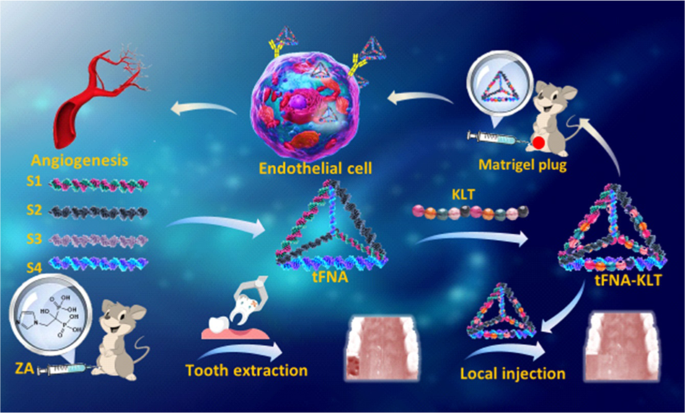
Tetrahedral framework nucleic acid carrying angiogenic peptide prevents bisphosphonate-related osteonecrosis of the jaw by promoting angiogenesis

alexandrossfakianakis shared this article with you from Inoreader

41368_2022_171_Figa_HTML.png

International Journal of Oral Science, Published online: 27 April 2022; doi:10.1038/s41368-022-00171-7

View on the web

Usability Experience of a Personal Sleep Monitoring Device to Self-manage Sleep Among Persons 65 Years or Older With Self-reported Sleep Disturbances

alexandrossfakianakis shared this article with you from Inoreader
imageIncreasingly, persons with self-reported health symptoms are using mobile health technologies to better understand, validate, and manage their symptoms. These off-the-shelf devices primarily utilize actigraphy to estimate sleep and activity. The purpose of this study was to describe qualitatively the experience of using a personal sleep monitoring device for sleep self-management in adults 65 years or older with self-reported sleep disturbances. This study followed a hybrid qualitative design using deductive and emergent coding derived from open-ended interviews (n = 25) after a period of 4 weeks using a wearable personal sleep monitoring device. Results expanded existing theoretical models on usability with the theme of personal meaning in the interaction between health and self-monitoring technology that were associated with age and technology use, privacy, and capability. Future studies for sleep health self-management and personally tailored interventions using personal sleep monitoring devices should continue to collect qualitative information in extending the understanding of user experience across different symptom clusters, such as sleep disturbances, that manifest more commonly in older age populations. This research is important for application in the use of mobile health technologies for nursing led health self-management interventions.
View on the web

Αρχειοθήκη ιστολογίου