Τρίτη 12 Απριλίου 2022

Poor Treatment Outcomes with Second-Line Chemotherapy in Advanced Synovial Sarcoma

alwin shared this article with you from Inoreader
Via Oncology
CONCLUSION: Our exploratory study revealed that the response rate of second-line chemotherapy regimens for patients with synovial sarcoma was 9.4%. Therefore, there is an urgent need to develop more active therapeutic regimens for synovial sarcomas.PMID:35405680 | DOI:10.1159/000524500 (Source: Oncology)
View on the web

NeuroEMCrit – Time is Brain – Acute Ischemic Stroke Part 2: Mechanical Thrombectomy

als.fakia shared this article with you from Inoreader

Thrombectomy-2-scaled.jpg

part II of the stroke update...

EMCrit Project by NeuroEMCrit Team (Casey & Neha).

View on the web

Introducing the Internet Book of NeuroCritical Care (IBNCC)

als.fakia shared this article with you from Inoreader

ibnccheader-scaled.jpg

Friends, Over the next several months we'll be adding ~26 additional chapters to the neurology section of the IBCC.  The ultimate goal is to create a complete neurocritical care textbook that is fully integrated into the IBCC.  (You can preview the final table of contents here.) Why more neurocrit?  The brain is one of the […]

EMCrit Project by Josh Farkas.

View on the web

Retrospective analysis of adjuvant radiotherapy in oral cavity or oropharyngeal cancer: Feasibility of omitting lower-neck irradiation

als.fakia shared this article with you from Inoreader

journal.pone.0266678.g002&size=inline

by Sheng-Yow Ho, Wan-Chen Kao, Sheng-Yen Hsiao, Sheng-Fu Chiu, Sung-Wei Lee, Jia-Chun Chen, Li-Tsun Shieh

Objectives

Adjuvant radiotherapy is the standard of care in locally advanced head and neck cancers. The radiation field is correlated with the surgical field in the adjuvant radiotherapy setting; therefore, tailoring the irradiation field is reasonable.

Materials and methods

We retrospectively analyzed patients with oral cavity and oropharyngeal cancers included in the cancer registry between 2015 and 2019 in the study hospital. Patients who underwent whole-neck irradiation (WNI) were compared with those who underwent lower-neck–sparing (LNS) irradiation.

Results

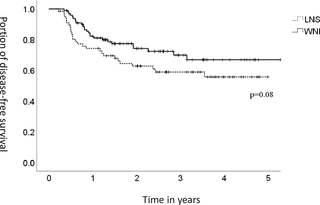
A total of 167 patients with oral cavity and oropharyngeal cancers were included in the study. Cancer recurrence was recorded in 33% of the patients. The rate of recurrence of oral cavity and oropharyngeal cancer at neck level IV was 8%. The 2-year incidence of level IV recurrence was lower in the WNI group than in the LNS group (2% vs. 10%; p = 0.04). The 2-year disease-free survival rates were 75% and 63% in the WNI and LNS groups, respectively (p = 0.08).

Conclusion

The rate of level IV recurrence was higher in the LNS group than in the WNI group. Trends of improvement in disease-free survival with lower-neck irradiation suggested that it is premature to consider LNS irradiation as daily practice in patients with oral cavity and oropharyngeal cancer.


View on the web

Κυριακή 10 Απριλίου 2022

Evaluation of interleukin‐38 levels in serum of patients with coronavirus disease 2019.

alexandrossfakianakis shared this article with you from Inoreader

Abstract

Interleukin-38 (IL-38) has recently been considered as a cytokine with anti-inflammatory properties in viral respiratory infections, particularly coronavirus disease 19 (COVID-19), but the evidence has not been well elucidated. Therefore, a case-control study was conducted to determine IL-38 serum levels in 148 patients with COVID-19 (45 moderate, 55 severe and 48 critical) and 113 controls. Results demonstrated that IL-38 levels did not show significant differences between patients and controls (68.7 [interquartile range: 62.7-75.6] vs. 67.7 [58.0-82.6] pg/mL; probability = 0.457). Similarly, patients stratified by disease severity, age group, gender or chronic disease showed no significant differences between IL-38 levels in each stratum. Whereas, overweight/obese patients had a significantly lower median of IL-38 compared to normal-weight patients. Further, IL-38 showed significantly higher levels in the age group ≥ 50 years of patients with crit ical illness than in the age group < 50 years. Female patients with severe disease also showed significantly elevated levels of IL-38 compared to male patients. In conclusion, the study indicated that serum IL-38 levels were not affected by COVID-19 infection, but the distribution of patients according to disease severity, age, gender and BMI may better reveal the role of IL-38 in disease pathogenesis.

This article is protected by copyright. All rights reserved.

View on the web

Video-Oculography to Guide Neuroimaging for Dizziness and Vertigo

alexandrossfakianakis shared this article with you from Inoreader

Otolaryngology.png

Dizziness and vertigo are among the most common presenting symptoms in both the emergency department (ED) and ambulatory outpatient clinics, with recent estimates suggesting roughly 18 million visits per year in the US (nearly 5 million to EDs and >13 million to outpatient clinics). These symptoms are caused by a wide array of conditions, but the most common benign causes are otologic, and the most common dangerous cause is stroke. Stroke accounts for 3% to 5% of dizziness presentations in the ED, and some evidence suggests that it may ac count for a similar percentage of dizziness presentations in ambulatory care clinics. Frontline clinicians are often poorly equipped to differentiate peripheral from central vestibular causes and are justifiably worried about missing strokes, so they often resort to neuroimaging as a knee-jerk diagnostic test response. Unfortunately, this choice leads to substantial ill effects, including frequent misdiagnoses and unnecessary imaging for millions of patients with inner ear causes of dizziness who should receive a diagnosis at the bedside, thus exposing patients to unnecessary irradiation (in the case of computed tomography [CT] scans) and incurring significant health care costs. Some estimates suggest that more than $1 billion is wasted each year on inappropriate CT scans alone.
View on the web

Neuroimaging for Patients With Dizziness

alexandrossfakianakis shared this article with you from Inoreader

ooi220010t1_1648674462.04202.png?Expires

This cross-sectional study uses commercial and Medicare Advant age claims to characterize neuroimaging use, timing, and spending as well as the factors associated with imaging acquisition within 6 months of presentation for dizziness in outpatient clinics vs emergency departments in the US.
View on the web

Αρχειοθήκη ιστολογίου