Τετάρτη 15 Φεβρουαρίου 2023

Antimicrobial for 7 or 14 days for febrile urinary tract infection in men: a multicenter noninferiority double blind placebo-controlled, randomized clinical trial

AlexandrosSfakianakis shared this article with you from Inoreader

cid_ogimage.png

Abstract
Background
The optimal duration of antimicrobial therapy for urinary tract infections in men remains controversial.
Methods
To compare 7 days to 14 days total antibiotic treatment for febrile urinary tract infections in men, this multicenter randomized, double-blind placebo-controlled non-inferiority trial enrolled 282 men from 27 centers in France. Men were eligible if they had a febrile urinary tract infection and urine culture showing a single uropathogen.Participants were treated with ofloxacin or third generation cephalosporin at day 1, then randomized at day 3-4 to either continue ofloxacin for 14 days total treatment, or for 7 days followed by placebo until day 14.The primary endpoint was treatment success, defined as a negative urine culture, the absence of fever and of subsequent antibiotic treatment between the end of treatment and 6 weeks after day 1. Secondary endpoints included recurrent urinary tract infection within weeks 6 and 12 after day 1, rectal carriage of antimicrobial-resistant Enterobacterales and drug-related events.
Results
Two hundred and forty participants were randomly assigned to receive antibiotic therapy for 7 (115 participants) or 14 days (125 participants). In the ITT analysis, treatment success occurred in 64 participants (55.7%) in the 7-day group and in 97 participants (77.6%) in the 14-day group (risk difference-21.9 (-33.3 to -10.1)), demonstrating inferiority. Adverse events during antibiotic therapy were reported in four participants in the 7-day arm and seven in the 14-day arm. Rectal carriage of resistant Enterobacterales did not differ between both groups.
Conclusion
A treatment with ofloxacin for 7 days was inferior to 14 days for febrile UTI in men and should therefore not be recommended.
View on Web

Multiomics STEP up in correlative analysis of response to CAR T cells

AlexandrosSfakianakis shared this article with you from Inoreader

Nature Reviews Clinical Oncology, Published online: 15 February 2023; doi:10.1038/s41571-023-00742-5

Plasma cell-free DNA analysis has emerged as a powerful liquid biopsy assay to assess circulating tumour DNA in response to cancer treatments. A new study shows that cell-free DNA can also inform on expansion kinetics and tumour-infiltration patterns in patients receiving chimeric antigen receptor T cells and, together with circulating tumour DNA, provides vivid prognostic insights into intratumoural dynamics.
View on Web

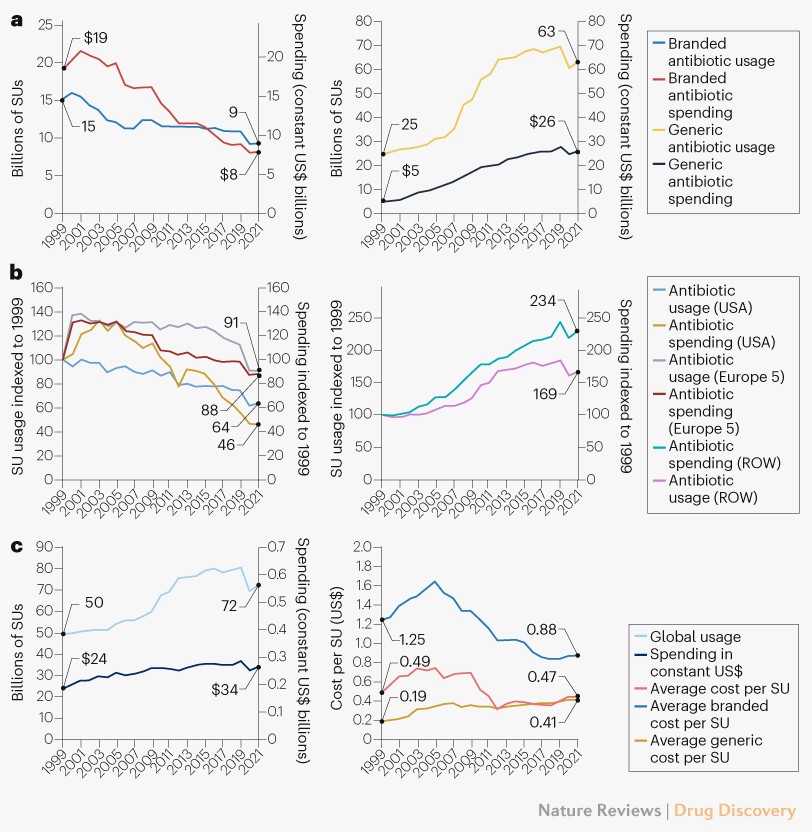
Trends in the global antibiotics market

AlexandrosSfakianakis shared this article with you from Inoreader

d41573-023-00029-5_24025932.jpg

Nature Reviews Drug Discovery, Published online: 15 February 2023; doi:10.1038/d41573-023-00029-5

Trends in the global antibiotics market
View on Web

Structural Analysis of MALAT1 long non-coding RNA in cells and in evolution [Article]

AlexandrosSfakianakis shared this article with you from Inoreader

Although not canonically polyadenylated, the long non-coding RNA MALAT1 (Metastasis Associated Lung Adenocarcinoma Transcript 1) is stabilized by a highly conserved 76 nucleotide triple helix structure on its 3' end. The entire MALAT1 transcript is over 8,000 nucleotides long in humans. The strongest structural conservation signal in MALAT1 (as measured by co-variation of base-pairs) is in the triple helix structure. Primary sequence analysis of co-variation alone does not reveal the degree of structural conservation of the entire full-length transcript, however. Furthermore, RNA structure is often context dependent; RNA binding proteins that are differentially expressed in different cell types may alter structure. We investigate here the in cell and cell free structures of the full-length human and green monkey (Chlorocebus sabaeus) MALAT1 transcripts in multiple tissue-derived cell lines using SHAPE chemical probing. Our data reveal levels of uniform str uctural conservation in different cell lines, in cells and cell free, and even between species, despite significant differences in primary sequence. The uniformity of the structural conservation across the entire transcript suggests that, despite seeing co-variation signals only in the triple helix junction of the lncRNA, the rest of the transcript's structure is remarkably conserved at least in primates and across multiple cell types and conditions.

View on Web

Τρίτη 14 Φεβρουαρίου 2023

MED27 plays a tumor‐promoting role in breast cancer progression by targeting KLF4

AlexandrosSfakianakis shared this article with you from Inoreader

Abstract

Our study found that MED27 was highly expressed in breast cancer and promoted breast cancer development, especially its metastasis and stemness maintenance, by targeting KLF4 both in vitro and in vivo. Mechanistically, MED27 transcriptionally activated KLF4 by binding to its promoter region in breast cancer cells. MED27 silencing sensitized breast cancer cells to epirubicin therapy. The high expression of MED27 and KLF4 alone or both was positively correlated with the differentiation status of cancer cells and predicted poor prognosis of breast cancer patients. All these findings provide the potential of developing MED27/KLF4 signaling axis as the cascade candidate therapeutic targets and prognosis biomarkers in breast cancer.

View on Web

Nonlinear absorption‐based analysis of energy deposition in melanosomes for 532‐nm short‐pulsed laser skin treatment

AlexandrosSfakianakis shared this article with you from Inoreader

Abstract

Background and Objectives

The clinical use of 532-nm short-pulsed lasers has provided effective treatment of epidermal pigmented lesions. However, the detection of significant differences in treatment effects between picosecond and nanosecond lasers has still varied among clinical studies. For robust evaluation of the differences based on the treatment mechanism, this study presents a nonlinear absorption-based analysis of energy deposition in melanosomes for 532-nm short-pulsed laser treatment.

Study Design/Materials and Methods

Nonlinear absorption by melanin is modeled based on sequential two-photon absorption. Absorption cross-sections and nonradiative lifetimes of melanin, which are necessary for the nonlinear absorption-based analysis, are determined from transmittance measurement. Using the model and parameters, energy deposition in melanosomes was calculated with varying fluence and pulse width settings, including actual clinical parameters.

Results

The energy deposition in melanosomes increased with shorter laser pulses, and subnanosecond laser pulses were found to be most efficient. The comparison of energy deposition calculated using clinical parameters demonstrated the differences in treatment effects between picosecond and nanosecond lasers reported in clinical studies.

Conclusion

The nonlinear absorption-based analysis provides quantitative evidence for the safety and efficacy evaluation of short-pulsed laser treatments, which may lead to the establishment of numerical indices for determining treatment conditions. Future studies considering the effects of the surrounding tissue on energy deposition in melanosomes will be needed.


View on Web

Evaluation of the effectiveness of maternal immunization against pertussis in Alberta using agent-based modeling: A Canadian immunization research network study

AlexandrosSfakianakis shared this article with you from Inoreader
via Vaccine

fbworm.png

CONCLUSIONS: Our model predicts significant reduction in future pertussis cases in infants due to maternal vaccination, with immunological blunting slightly moderating its effectiveness. The model is most sensitive to maternal vaccination coverage. The interruption of exposure pathways plays a role in the reduction of pertussis burden in infants due to maternal immunization. The effect of maternal immunization on population other than infants remains to be elucidated.PMID:36775775 | DOI:10.1016/j.vaccine.2022.12.071 (Source: Vaccine)
View on Web

Αρχειοθήκη ιστολογίου